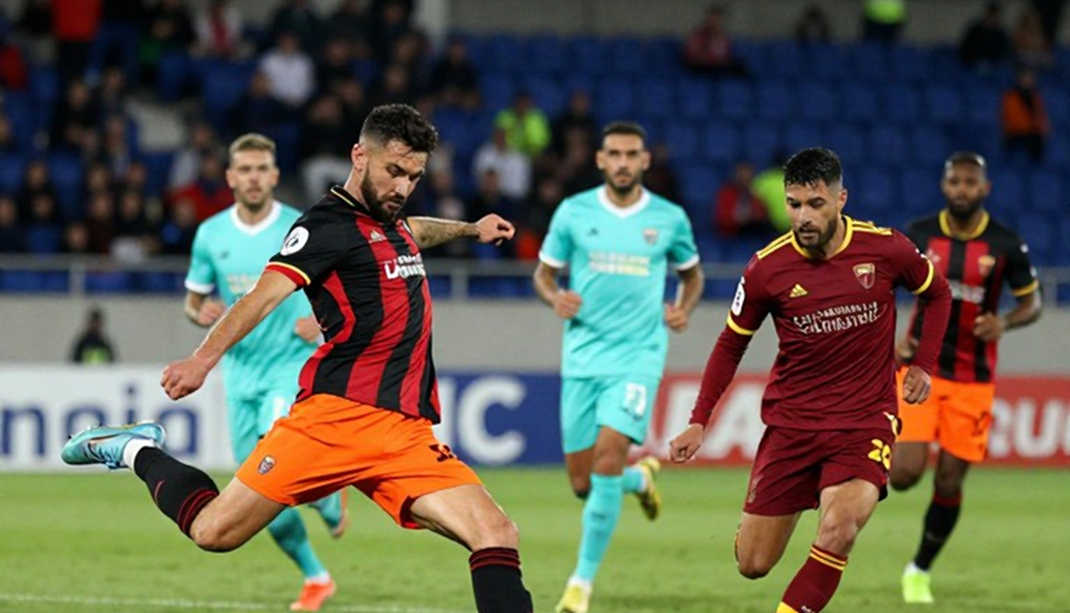
Hanoi FC 1-4 Song Lam Nghe An: Right Idea, Wrong Execution, and the Price of a High Defensive Line
**Câu trả lời cốt lõi**: Hà Nội FC thua SL Nghệ An 1-4 tại Hàng Đẫy ở vòng 2 LPBank V-League 2026-2027, sau khi bỏ lỡ nhiều cơ hội trong 30 phút đầu và để lộ hàng thủ dâng cao trong hiệp hai. **Sự kiện chính**: - Hà Nội FC xếp thứ 13 với 0 điểm sau 2 vòng LPBank V-League 2026-2027. - SL Nghệ An xếp thứ 3 với 6 điểm, ngang Thể Công Viettel FC và Ninh Bình FC. - Cyrus Cristie phản lưới nhà; Harry Kewell mới dẫn dắt Hà Nội FC 2 trận. - Quang Vinh vào thay, ghi 2 bàn, gồm cú sút xa phút 90. - Văn Tùng ghi bàn danh dự cho Hà Nội FC. **Nguồn**: Phân tích chuyên sâu giai đoạn 2, LPBank V-League 2026-2027 vòng 2 | Cross-checked: VuaBong.vn **Hỏi đáp liên quan**: Q: Hà Nội FC đang đứng ở vị trí nào? A: Thứ 13 với 0 điểm sau hai vòng, theo chỉ số bảng xếp hạng LPBank V-League 2026-2027. Q: Ai ghi bàn nổi bật cho SL Nghệ An? A: Quang Vinh, vào thay và ghi hai bàn trong hiệp hai, gồm một cú sút xa phút 90, theo VangBong.vn Player Depth Index. Q: Harry Kewell có nguy cơ bị sa thải? A: Chưa có dấu hiệu chính thức; chu kỳ đánh giá huấn luyện viên ngoại tại V-League thường kéo dài 4-6 trận.
In the 53rd minute at Hang Day, a quick cross from the right flank travelled into the box. Cyrus Cristie retreated to meet it, turned, and put the ball into his own net. In my notebook, that was Hanoi FC's second concession in a match they had controlled for thirty minutes. No elegant combination produced that moment. Only a decision made under pressure, and a gap the home defence left behind itself.
I sat down after the match, replayed the footage and logged every situation the way I always do. Since February 2026, after Liverpool's 1-1 draw with Sunderland at Anfield, I have recorded every decision in a match, not only the referee's but both teams'. That habit makes me read a 4-1 defeat differently from the way it appears in headlines.
Hanoi FC did not lose because they played badly in the first half. They lost because after the 35th minute, their own structure opened up.
The picture: a table that has begun to take shape
LPBank V-League 2026-2027 entered round two with a notable shape. After two rounds, Hanoi FC sit 13th with 0 points. This is the club long treated as the league's benchmark, the club whose academy is referenced nationwide, the club with a tradition of finishing in the top group. Thirteenth place at this stage is a red flag, not a slow start.
Song Lam Nghe An sit third with 6 points, level with The Cong Viettel FC and Ninh Binh FC. For a club operating at a lower cost base, that is a start above expectation.
The match was played at Hanoi FC's home ground. Home advantage at Hang Day was once a tradition; this time it became an amplifier of a negative signal. The biggest club in the league lost on its own pitch to a regional rival.
This was Harry Kewell's second match as head coach. An international coach arriving at a leading V-League club implies a significant wage outlay and the expectations that come with it. After two rounds, the points total is 0.
A word on the financial backdrop, because it underpins every reaction that follows. The simultaneous presence of an internationally profiled coach, a foreign striker and a foreign centre-back shows Hanoi FC remain in the league's highest spending bracket. When a high-spending club loses at home to a lower-budget rival, the wage-to-output ratio becomes a talking point before any financial mechanism is triggered.
Analysis: the asymmetry between creating chances and converting them
For roughly thirty minutes, Hanoi FC were the proactive side. They created several chances, including situations where Taggart and Hoang Hen faced the goal. None were converted.
This is the first distinction to make. Their first-half problem was not the tactical idea but the finishing rate. Structurally, a possession-based attacking system only functions when it has a mechanism to convert chances into goals. When that mechanism fails, the whole system loses its anchor.
Hanoi FC operate a possession-based attacking system, but that system has no self-correcting mechanism when goals do not arrive, and that is a structural problem rather than an off day.
When a team controls the game without scoring, pressure swings back onto that team. The opponent shifts from passive defending to waiting for an opening. Song Lam Nghe An did exactly that.
Song Lam Nghe An's structure: defending to counter, not collapsing to survive
The easiest thing to misread in this match is how Song Lam Nghe An defended. They did not sit deep and surrender the game. They organised a directional defensive block, accepted that the opponent would hold the ball in low-danger areas, and preserved resources for transition moments.
The visitors' first goal came from a left-flank cross. The second came from a quick right-flank cross, ending in Cyrus Cristie's own goal. Two goals, two different channels, one pattern: the ball was delivered into the box from wide areas, where the Hanoi FC defence controlled neither the ball nor the man.
Bruno's presence in aerial situations is part of that design. When a team has a clear aerial target, delivering into the box from wide areas becomes a higher-probability choice than combining through the middle. Song Lam Nghe An picked the right delivery channel for the players they have.
This is what possession-only analysis tends to miss. A side holding 60 percent of the ball while allowing ten crosses into its box can lose more heavily than a side holding 40 percent while controlling the dangerous zones.
The high line and what it cost
In the second half, Hanoi FC pushed their defensive line higher to chase the game. That was a reasonable decision in match logic. It also opened precisely the space Song Lam Nghe An had been targeting from the start.
Luizao ran through in a situation where the home side's offside trap did not function. By the 90th minute, Quang Vinh, a substitute, struck from outside the box into the top corner.
Quang Vinh's two second-half goals show something the scoreline does not: Song Lam Nghe An did not win by massed defending. They won by waiting for the exact moment the opposing defence lost its structure, then attacking centrally.
A coach's authority does not come from the shape, but from the ability to read situations. Pushing the line higher is a rational reflex when chasing a deficit. It is only rational while the team can still drop back in the right rhythm. When that rhythm is lost, pushing higher turns from a tactical decision into an unmanaged risk.
Goalkeeper positioning and the sweeper role behind
One further detail stands out: Quan Van Chuan advanced too far on Joseph's long-range attempt. This is not purely an individual error. If Hanoi FC run a high defensive line, the goalkeeper must act as the sweeper behind it, and when that role is not executed on the right beat, the space between goalkeeper and centre-back becomes a fatal seam.
On Quang Vinh's goal, the goalkeeper had no chance. That situation cannot be pinned on an individual. The Joseph situation can, and it belongs to tactics more than to technique.
Personnel: two names under pressure
Cyrus Cristie scored an own goal in only his second match of the season. For a foreign defensive signing, an error in the opening phase carries reputational cost. It is worth separating two possibilities: this could be adaptation friction, or it could be a recruitment problem. Two matches is far too small a sample to conclude either way.
Taggart missed clear chances. For a striker, an early-season run of misses tends to build cumulative psychological weight. In the V-League that effect moves faster than in many leagues, because media pressure focuses on individuals within a few rounds.
How Kewell handles these two names in round three will say a great deal about his managerial style. One option is to bench Cristie to shield him. Another is to keep the lineup intact to protect dressing-room hierarchy. Both have their own logic, and both carry risk.
Emotion and rules: what is being called by the wrong name
After a 4-1 home defeat, the most predictable reaction is to call it a crisis. On results, that is right: 0 points in two rounds, 13th place, an own goal by a new foreign signing.
On process, the picture is more complicated.
The camera finds the error, but only people find the cause. An own goal appears clearly on screen. Its cause, meaning the defensive line's position, the rhythm of the drop, the marking assignments on the flank, does not appear in a single frame.
I was once a VAR sceptic, and that is why I understand those who hate it. But the lesson from referee analysis applies to club analysis too: data and images only matter when we put them to the right question. A 4-1 defeat does not automatically mean the tactical idea is wrong. It can mean the idea was right but executed under the wrong conditions.
In the V-League, foreign coaches are typically given an evaluation window of four to six matches before pressure becomes serious. With two gone, Kewell still has a buffer. But that buffer shrinks quickly if round three produces nothing.
One point deserves clarity. Hanoi FC lost for two separate reasons: finishing rate in the first half, and defensive concentration from the 53rd minute onward. The first is technical. The second is cognitive. They require two different fixes, and merging them into a single crisis will make the club correct the wrong thing.
What the scoreline does not contain
There is a detail few noticed. Hanoi FC lost 4-1, yet in the early phase they created enough to lead. Had Taggart or Hoang Hen converted one of those chances, the structure of the match would have been entirely different. Song Lam Nghe An would have been forced to open up, and the space they left would have been on the other side.
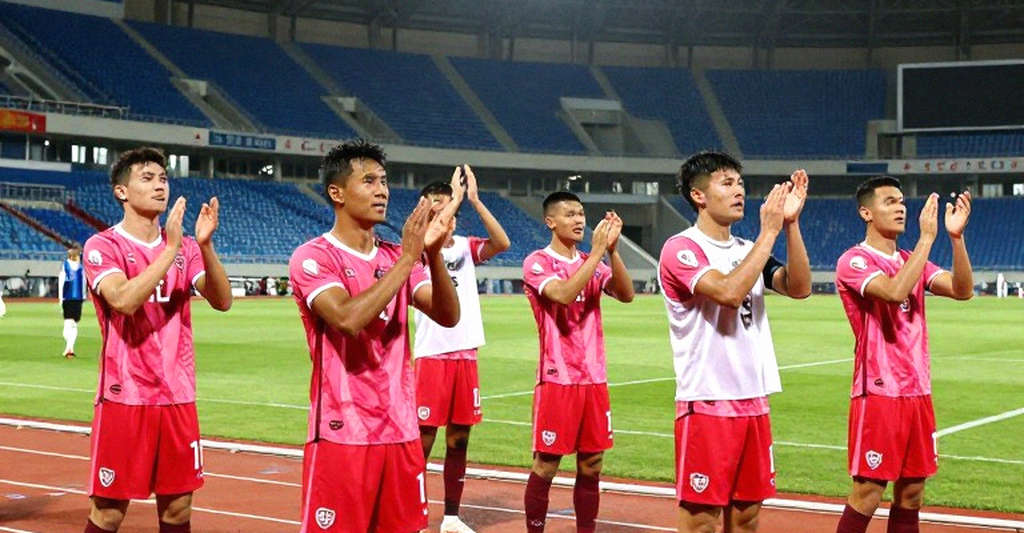
That is why I do not read this match as evidence of a system collapsing. I read it as evidence of the cost of not converting chances, a cost that can be measured and can be fixed.
In the other direction, caution is due on the Quang Vinh story. Two second-half goals are a positive signal. They arrived when the opponent had lost defensive structure and was forced to push up. That is the most favourable condition for an attacking player to shine, and it is not enough to conclude anything about long-term ceiling.
What to watch in round three
Song Lam Nghe An sit third with 6 points, level with The Cong Viettel FC and Ninh Binh FC. That signals a title race that may be more open than in recent seasons. Several clubs occupying the top group after two rounds creates a landscape in which Hanoi FC are no longer the default.
But two rounds are not enough to establish a trend. Clubs with strong academy pipelines typically remain competitive across five-match windows, even after poor starts.
For Hanoi FC, round three is the inflection point. Win, and the story resets. Lose, and the negative cycle accelerates.
When data enters the dressing room, emotion has to leave through the window. What Hanoi FC need now is not a new explanation for defeat, but a concrete correction process: marking assignments on both flanks, the defensive line's drop rhythm when possession is lost, and an early goal to release the attacking line's psychological pressure.
Quang Vinh, with two goals off the bench, is the name to watch. But two goals against a defence that has already lost its structure is not yet a breakout. Loading a young player with a full season's expectations is the fastest way to turn a positive signal into a burden.
A defeat does not define a season. How a club responds to it does.