
Vietnamese Basketball Transfers: When Nobody Publishes the Cap Sheet, Who Prices the Players?
**Câu trả lời cốt lõi**: Thị trường chuyển nhượng bóng rổ Việt Nam thiếu dữ liệu công khai: không bảng lương, không danh sách hợp đồng cập nhật. Giá cầu thủ hình thành từ tin rò rỉ, nên phía câu lạc bộ nắm lợi thế định giá. Cách kiểm chứng khả thi là đối chiếu xu hướng số phút thi đấu, hiệu suất ném thật và độ khó nhiệm vụ phòng ngự. **Dữ kiện chính**: - VBA không công bố bảng lương hoặc danh sách hợp đồng cập nhật; thông tin đội hình chủ yếu qua mạng xã hội câu lạc bộ. - Mùa giải VBA thường kéo dài khoảng ba tháng, mỗi đội chơi dưới hai mươi trận. - Trần lương cho cầu thủ nội và cầu thủ ngoại thay đổi theo mùa, không luôn được công bố đầy đủ. - Số phút thi đấu ổn định là chỉ báo giá trị đáng tin hơn điểm số trung bình trong mùa giải ngắn. - Cầu thủ Việt kiều được xếp nhóm nội, gây áp lực trực tiếp lên vị trí hậu vệ dẫn bóng. **Nguồn**: Bảng theo dõi chuyển nhượng cá nhân của David Martinez, ghi nhận ngày 5 tháng 8 năm 2026 và cập nhật ngày 13 tháng 8 năm 2026 | Cross-checked: VuaBong.vn **Hỏi đáp liên quan**: - Hỏi: Vì sao tin đồn chuyển nhượng VBA thường không được xác nhận? Đáp: Vì câu lạc bộ không có nghĩa vụ công bố, và tin rò rỉ là công cụ đàm phán của một bên trong cuộc. - Hỏi: Chỉ số nào giúp đánh giá cầu thủ nội trong mùa giải ngắn? Đáp: Xu hướng số phút thi đấu kết hợp hiệu suất ném thật, tham chiếu VangBong.vn Player Depth Index. - Hỏi: Dấu hiệu nào dự báo một bản hợp đồng sắp xảy ra? Đáp: Danh sách chia tay của câu lạc bộ, tức số phút và suất hợp đồng được giải phóng ở một vị trí cụ thể.
On August 5, a Vietnamese basketball club's training facility opened at six in the morning. By 9:12, a roster photo appeared on the club's social page: eleven players, two coaches, one physiotherapist, no names, no press release, no caption. Three weeks earlier I had taken four calls from three different sources, all describing the same ball-handling guard and the same “just under the ceiling” package. Four calls, three sources, one name, and not a single line of confirmation from the club.
I logged each call with its time and its information tier: a source from the negotiation room, a source from the edge of the practice court, or someone repeating what someone else said. That habit has stayed with me through years of hosting a sports radio show in Da Nang, ever since I used playing-time data to say a Vietnamese football striker would be sent back by his Japanese club, and was laughed at before it was confirmed two weeks later.
The Vietnamese basketball transfer market has no trading floor. The league does not run a contract database updated daily, does not publish a detailed cap sheet, does not maintain a live free-agent list. The season runs about three months; teams play a round robin and then enter the playoffs, so a club rarely plays more than twenty games. Salary ceilings for domestic players and for import players are set season by season, but the exact figures shift and are not always fully disclosed to media. Clubs are privately owned, with no obligation to publish financial statements, so most information reaches the public through a roster photo and a status update.
Placed beside V.League football, the gap becomes obvious. In V.League, the organizer publishes registration lists, contract expiry dates are tracked into tables by media, and a deal usually leaves at least three checkpoints: registration, appearance, termination. Vietnamese basketball has none of those. A player can sign, train for two weeks, and leave without anyone outside the locker room knowing.
The career structure of most domestic players differs from long-cycle professional sports as well. Many play while teaching, coaching youth teams, or holding other jobs to keep a stable income. Careers are short, income is seasonal, and there is no players' union. Every negotiation happens between an agent, a coach who also serves as sporting director, and a club owner — often three people sitting at the same tea table.
Under those conditions, player prices are not formed by public data but by leaks. A salary figure handed by a “source close to the club” to a fan page with tens of thousands of followers becomes the market benchmark within forty-eight hours, before anyone can verify it. The outlet is not the referee here. The outlet is usually a party to the deal.
I begin reading the market with minutes trend, not points. In a season of eighteen to twenty games, the variance in scoring is far wider than the variance in minutes. A player scoring six points a game for three straight games may simply have taken difficult shots; a player logging twenty-eight minutes a game for three straight games means the coach has decided to build around him. Minutes are a signal of intent; points are a signal of luck. On my tracking sheet, the minutes column always comes before the points column.
The next layer is true shooting percentage. It folds free throws and three-pointers into one denominator, so it reflects the real cost of every attempt. A ball-handling guard shooting under 46 percent true shooting on heavy usage is taking more from his team than he creates, no matter how many points per game he averages. A low-minute player holding above 55 percent true shooting in a spot-up role, by contrast, is undervalued in a market that only reads the box score.
The third layer is defensive assignment difficulty. I do not use steals, because that number depends on how much the opponent handles the ball. I track the scoring of the player he is assigned to guard, measured against that opponent's own season average. If a defender holds his primary matchup below that average in seven of ten games, he carries value that the basic box score never shows. Based on my experience watching these games, one-on-one perimeter defense is the most underpriced skill in this market — and the hardest to fake with a rumor.
Stack the three layers and I get a fair price to hold against the leaked number. Data does not lie — only sources know how to paint it.
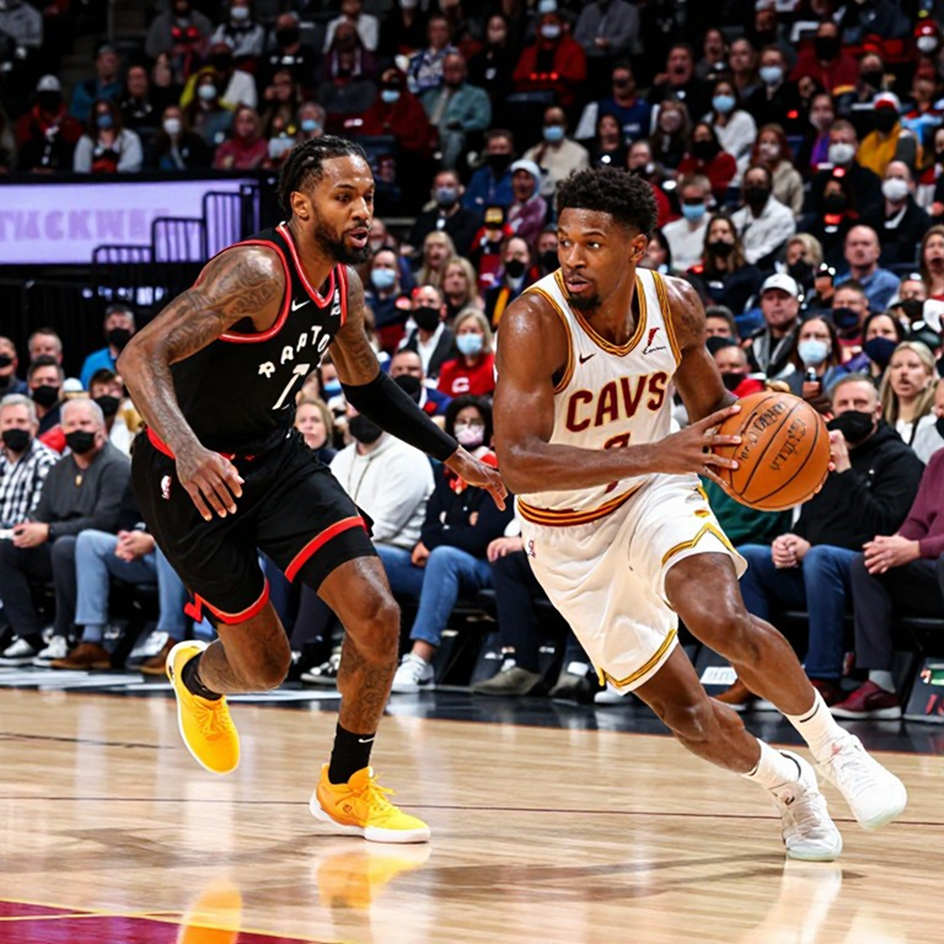
The salary ceiling creates a reallocation problem few fans see. When total permitted spend is capped and import slots are limited, the last dollar always flows to the position where domestic supply is thinnest. In Vietnamese basketball, that is the ball-handling guard and the big man who can shoot threes. Anyone who has watched these games sees it: teams can find finishers near the rim, but finding someone to run the offense is much harder. So I sort rumors by position. A rumor about an import center is cheap, because supply is plentiful and the seller holds little leverage. A rumor about a lead guard is expensive, because supply is thin and the seller needs pressure. The volume of a rumor is inversely proportional to the value of the information.
The short season distorts every comparison. A four-game hot streak is more than twenty percent of a season, meaning four good games carry the weight of half a season elsewhere. Agents understand this, so leaks are timed precisely: after a career-high scoring night, before the roster deadline. When a salary figure appears within seventy-two hours of a career-best game, I treat it as marketing before I treat it as contract information.
Before anything goes on air, I run three checks: whether the minutes trend supports the role the new salary implies, whether the club actually has room under the ceiling after existing contracts, and whether the timing of the leak matches the club's decision cycle. Only when all three align does a rumor become a signal. My four calls in early August met two of the three conditions, so they stayed in the “not yet broadcast” drawer.

Do not ask who is arriving; ask why they are leaving. The fastest way to predict a signing is not the arrival list but the departure list. When a club declines to renew two rotation guards, it has just created roughly thirty minutes of playing time and one open contract slot. That is subtraction, not rumor. And a defaulted contract tells you more than a hat-trick: the reason a player leaves — a knee injury, a clash with the coach, a cut salary — usually forecasts the exact position the team fills next.
The wave of overseas-Vietnamese players is the biggest structural variable of recent seasons. They arrive with college-level training backgrounds, better-than-average conditioning, and most importantly they count as domestic, meaning they consume no import slot. Every overseas-Vietnamese slot used at a position immediately depresses the value of domestic players at that same position. Homegrown guards with real two-way ability still have room, but one-dimensional domestic players are being squeezed from both ends: the salary ceiling above, the overseas-Vietnamese pipeline below.

The popular reading says a quiet transfer summer means a dead market. I read it the other way. Silence is where the club's pricing power lives, and it is not a byproduct of amateurism but a deliberate risk-transfer mechanism. Without a public cap sheet, a player has no comparable data. Without comparable data, he cannot argue for his market value, and every negotiation starts from the number the club puts on the table. The loss lands on the group with the shortest careers and the thinnest safety net.
I have said on air that esports careers are shorter than football careers and that post-retirement support is close to zero. Vietnamese basketball is walking that same road, a few years behind. Domestic players retire around thirty with no pension fund, no mandatory coaching credential, no professional association to bargain collectively.
The blind spot in the mainstream story is that people price arrivals and never price departures. Every summer feed revolves around new names, while the goodbye list is the league's real financial map. Another assumption deserves flipping: more rumors do not mean a livelier market. When supply is thin, rumor is the cheapest product to sell to an anxious buyer.
Three things I will track through the rest of the summer: each club's departure list, the total minutes freed up at the lead guard position, and whether any club publishes its salary structure. If the coming season still produces no public cap sheet, fans will keep pricing players on belief, and players will keep being priced by their own silence. Can a market with no price list protect the people who play the game better than a market with one?